Magnesium for Muscle Recovery: The Complete Guide (2026)
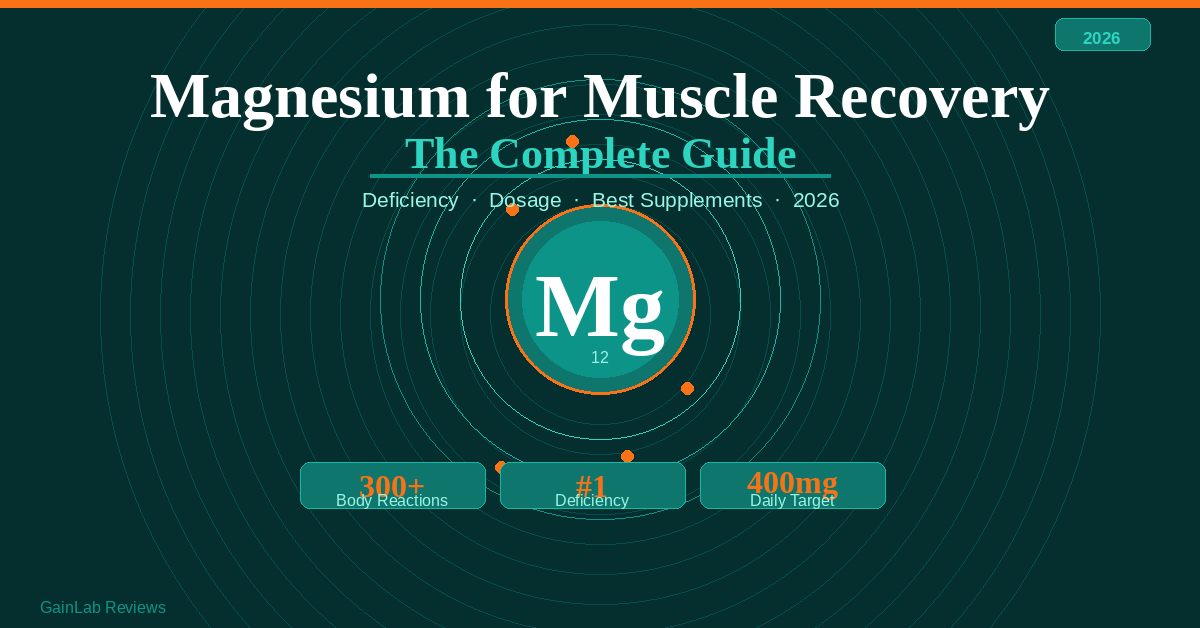
Using magnesium for muscle recovery is one of the most underrated topics in fitness – and the most commonly deficient mineral in people who train regularly. Unlike protein and creatine which get all the attention, magnesium works quietly behind the scenes supporting over 300 biochemical reactions in your body including muscle contraction, protein synthesis, sleep quality, and energy production. This guide covers exactly what magnesium does for muscle recovery, how much you need, and the best supplements to take. This is the definitive guide to magnesium for muscle recovery.
Note: This post contains affiliate links. If you buy through our links we may earn a commission at no extra cost to you.
Why people who workout are almost always magnesium deficient
The recommended daily intake of magnesium for adults is 310-420mg. Most people already fall short of this through diet alone. Add regular training to the equation and the deficit widens dramatically – magnesium is lost through sweat at significant rates during exercise, and the harder and more frequently you train, the more you lose. Studies show that athletes consistently have lower magnesium levels than sedentary people even when consuming magnesium-rich foods regularly. The problem compounds over time – chronic low magnesium doesn’t cause obvious symptoms immediately, it just gradually undermines your recovery, sleep quality, and performance until you address it.
Magnesium for muscle recovery – what the science says
Magnesium plays a direct role in every stage of the muscle recovery process. During training it regulates muscle contraction and prevents excessive calcium buildup that causes cramping. After training it activates the enzymes responsible for protein synthesis – the process by which your muscles actually repair and grow. During sleep it supports the production of growth hormone which drives overnight muscle repair. A magnesium deficiency at any stage of this process slows recovery, increases soreness, and reduces your training adaptations over time.
Magnesium and sleep – the overlooked connection
Sleep is when the majority of muscle repair happens. Growth hormone peaks during deep sleep stages and protein synthesis is most active overnight. Magnesium directly regulates the neurotransmitter GABA which promotes relaxation and deep sleep. Research shows magnesium supplementation significantly improves sleep quality, sleep duration, and morning recovery in people with low magnesium levels. For gym goers who train hard and struggle with sleep quality, magnesium glycinate before bed is often the single most impactful change they can make to their recovery.
How much magnesium do you need?
The standard recommendation for adults is 310-420mg per day from all sources combined. For people who train regularly a slightly higher intake of 400-500mg is often recommended to compensate for sweat losses. Start with 200-300mg of supplemental magnesium per day and increase gradually – too much magnesium at once causes loose stools which is a reliable sign you’ve taken more than your body can absorb at one time. Splitting your dose into morning and evening helps with absorption and tolerance.
Which form of magnesium is best for muscle recovery?
Not all magnesium supplements are equal – the form matters significantly for absorption and tolerability. Here’s how the main forms compare:
Magnesium glycinate is the best all-round choice – highly bioavailable, gentle on the stomach, and the form most studied for sleep and recovery benefits. Magnesium citrate is well absorbed and cheaper than glycinate but has a stronger laxative effect at higher doses. Magnesium oxide is the cheapest and most common form found in low-quality supplements – poorly absorbed with only around 4% bioavailability, essentially a waste of money. Magnesium malate is good for energy production and muscle function, making it a solid choice for pre-workout use. Magnesium threonate is the only form that crosses the blood-brain barrier effectively – best for cognitive benefits but expensive and unnecessary for pure recovery purposes.
For muscle recovery and sleep – magnesium glycinate is the clear winner.
If you’re still unsure of which form of magnesium to buy, see our magnesium glycinate vs citrate comparison for athletes article for additional information.
Best magnesium supplements for muscle recovery (2026)
We evaluated magnesium supplements based on form, bioavailability, dose per serving, third-party testing, and value. Here are our top picks:
BulkSupplements Magnesium Glycinate – The best value magnesium glycinate available anywhere. BulkSupplements delivers pure magnesium glycinate powder with no fillers, binders, or unnecessary additives – just the active ingredient at the lowest cost per serving on the market. Available in sizes from 100g to 5kg making it extremely economical for daily long-term use. Unflavored and mixes easily into water or juice. Third-party tested for purity. If budget is your priority this is the clear choice – same form and bioavailability as products costing three times more.

- Foundational Elements for Wellness: Magnesium Glycinate powder, one of our magnesium supplements, are the cornerstones o…
- Designed for Optimal Health: Elevate your daily wellness routine with our Magnesium Glycinate powder, or Magnesium Bisgl…
- Convenient Powder Form for Easy Integration: Say goodbye to cumbersome pill regimes! Our Magnesium Glycinate supplement,…
Thorne Magnesium Glycinate – The premium choice for magnesium glycinate supplementation. Thorne uses a highly bioavailable bisglycinate chelate form and is NSF Certified for Sport — the most rigorous third-party certification in the supplement industry required by many professional sports organisations. Each capsule delivers 200mg of elemental magnesium in a clean formula with no unnecessary additives. Thorne’s quality control is among the best in the industry making this the go-to choice for anyone who needs absolute certainty about what they’re consuming.

- Whole Body Wellness: Magnesium, a crucial mineral because it is involved in more than 600 of the body’s enzymatic reacti…
- Restful Sleep Support: Magnesium Glycinate contains glycine, a calming neurotransmitter, and promotes muscle relaxation …
- Stress Relief: Magnesium Glycinate helps regulate emotional well-being to promote a calm response to everyday stress, wh…
Doctor’s Best High Absorption Magnesium – The best mainstream magnesium glycinate for most people. Doctor’s Best uses the TRAACS chelated form of magnesium glycinate – one of the most bioavailable and well-researched forms available. Delivers 200mg of elemental magnesium per serving in an easy to swallow tablet. Widely available at pharmacies, health stores, and Amazon making it the most accessible quality magnesium supplement on the market. Excellent value for a chelated form from a brand with a strong quality track record spanning decades.

- MAGNESIUM GLYCINATE LYSINATE SUPPLEMENT: Our formula provides support for muscles, nerves, & sleep quality. It’s 100% ch…
- MAXIMUM ABSORPTION: Magnesium glycinate is good, lysinate glycinate is even better. Our magnesium mineral supplement tak…
- SLEEP AND MUSCLE RELAXATION: Magnesium supports healthy, restful sleep and relaxation by helping regulate melatonin, cor…
NOW Foods Magnesium Glycinate A reliable and affordable capsule option from one of the most respected supplement brands in the industry. NOW Foods Magnesium Glycinate delivers 180mg of elemental magnesium per serving using a chelated bisglycinate form for superior absorption. GMP certified and third-party tested. Available in both 90 and 180 count bottles making the larger size excellent value for daily supplementation. NOW Foods has earned a reputation for consistent quality at fair prices over decades — one of the safest choices in the supplement industry.
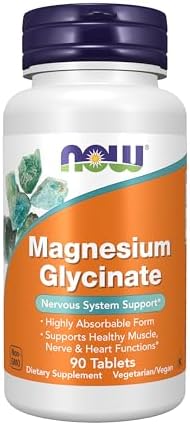
- HIGHLY ABSORBABLE FORM: Magnesium glycinate utilizes magnesium bound to the amino acid glycine, which facilitates intest…
- SUPPORTS HEALTHY MUSCLE, NERVE, AND HEART FUNCTIONS*: Magnesium is a mineral that is critical for energy production and …
- SUGGESTED USAGE: Take 2 tablets 1 to 2 times daily with food
Pure Encapsulations Magnesium Glycinate The best choice for people with sensitivities to fillers and additives. Pure Encapsulations uses only hypoallergenic ingredients – no artificial colors, flavors, sweeteners, coatings, or common allergens. Delivers 120mg of elemental magnesium per capsule using a highly bioavailable chelated form. NSF Certified and third-party tested. More expensive than mainstream options but the exceptionally clean formula makes it the right choice for anyone who reacts to common supplement additives or has multiple food sensitivities.

- Heart Health Supplements: This magnesium glycinate capsule activates the enzymes necessary for neuromuscular contraction…
- Energy & Bone Support: Magnesium supports metabolism of carbs and amino acids; supports energy production and use of cal…
- Overall Health & Nutrient Metabolism: This magnesium glycinate supplement helps the metabolism and utilization of vitami…
When to take magnesium for best results
Timing matters more for magnesium than most supplements. Taking magnesium 30-60 minutes before bed is the most effective approach for most people – it supports the GABA pathway that promotes deep sleep and maximizes overnight muscle recovery. If you train in the evening taking magnesium shortly after your workout and then again before bed works well at a split dose of 150-200mg each time. Avoid taking magnesium at the same time as zinc or calcium – these minerals compete for absorption pathways so separate them by at least two hours.
Magnesium vs other recovery supplements
How does magnesium compare to other supplements you might already be taking when it comes to muscle recovery? Magnesium and creatine work through completely different mechanisms and complement each other perfectly – creatine supports energy production during training while magnesium supports recovery and sleep after training. There is no conflict between them and most serious athletes take both.
Magnesium and protein powder are similarly complementary – protein provides the building blocks for muscle repair while magnesium activates the enzymes that drive the repair process itself. Think of magnesium as the catalyst that makes your other supplements work better.
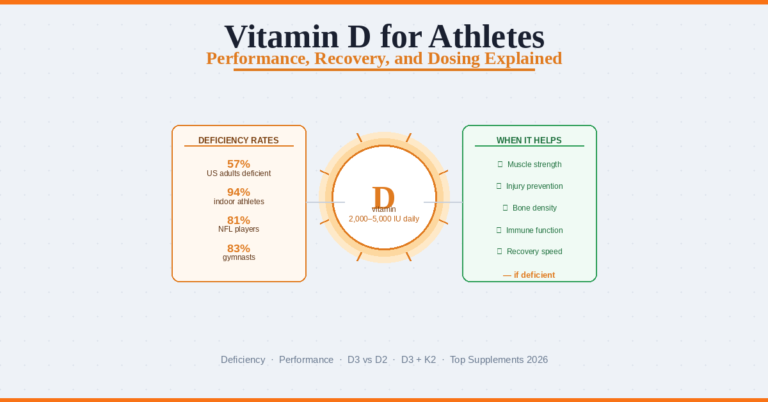
Vitamin D is another micronutrient athletes frequently overlook – and magnesium is required for its activation. See our vitamin D for athletes guide for the full connection.
For even more information on building a complete recovery supplement stack see our article titled omega-3 for muscle recovery – magnesium and omega-3 address different aspects of recovery and work well together.
Signs you are magnesium deficient
Magnesium deficiency rarely causes dramatic symptoms – it shows up as a collection of subtle signs that most people attribute to overtraining or poor diet. Muscle cramps and twitches especially at night are the most common sign. Poor sleep quality and difficulty reaching deep sleep stages despite feeling tired. Persistent fatigue that doesn’t improve with rest. Increased anxiety or irritability, particularly in the days after hard training. Slow recovery between sessions – feeling sore for longer than expected after normal training loads. If you recognise three or more of these symptoms, magnesium supplementation is worth trying before investigating other causes.
Frequently asked questions
Can you get enough magnesium from food alone?
Theoretically yes – magnesium is found in dark leafy greens, nuts, seeds, whole grains, and dark chocolate. In practice, most people training regularly don’t consume enough magnesium-rich foods to compensate for sweat losses. Soil depletion over recent decades has also reduced the magnesium content of many crops meaning the same foods contain less magnesium than they did 50 years ago. Supplementation is the most reliable way to ensure adequate intake for people who train hard.
How long does magnesium take to work?
Sleep improvements are often noticeable within the first week of consistent magnesium supplementation. Muscle cramp reduction typically takes 2-3 weeks. Performance and recovery improvements are harder to notice directly but accumulate over 4-8 weeks of consistent use. Magnesium works best as a daily long-term supplement rather than an occasional one – consistency is key.
Can you take too much magnesium?
The main side effect of excess magnesium is loose stools – your body excretes what it can’t absorb through the digestive tract. This is harmless but uncomfortable and is a reliable signal to reduce your dose. Stay below 500mg of supplemental magnesium per day unless advised otherwise by a doctor. Magnesium toxicity from supplements is extremely rare in people with normal kidney function.
Is magnesium glycinate better than magnesium citrate?
For muscle recovery and sleep magnesium glycinate is the better choice – it’s gentler on the digestive system, has excellent bioavailability, and the glycine component has its own relaxation and sleep benefits. Magnesium citrate is cheaper and also well absorbed but has a stronger laxative effect at higher doses making it less comfortable for daily long-term use. If cost is your primary concern citrate is a reasonable alternative – if you can afford glycinate it’s worth it.
Our verdict
Magnesium for muscle recovery is one of the most impactful additions to any training routine.. If you train regularly and aren’t supplementing magnesium there’s a strong chance a deficiency is quietly limiting your recovery, sleep quality, and performance gains. Start with 300mg of magnesium glycinate before bed and give it two to three weeks – the sleep and recovery improvements for most people are noticeable enough to make it a permanent part of their routine. Our top pick is Doctor’s Best High Absorption Magnesium for most people – excellent bioavailability, widely available, and very affordable for daily use.