Creatine for Women: Benefits, Safety, and How to Take It (2026)
Creatine is the most researched supplement in existence – yet the majority of women still avoid it. The reasons are almost always the same: fear of bulking up, concerns about bloating, or the assumption that it’s only for male bodybuilders. None of these hold up to scrutiny. The science on creatine for women is compelling and growing fast, with recent research showing women may actually benefit from creatine supplementation more than men in several important areas. This guide covers everything you need to know – benefits, safety, dosing, myths, and the best products to consider.
Note: This post contains affiliate links. If you buy through our links we may earn a commission at no extra cost to you.
Why creatine is different for women than men
Most creatine research has historically been conducted on male subjects, which has led to the widespread assumption that findings apply equally to women. The reality is more nuanced. Women naturally have 70-80% lower endogenous creatine stores than men, consume significantly less dietary creatine since women eat less red meat and fish on average, and experience hormonal fluctuations throughout the menstrual cycle that affect energy metabolism.
These differences mean that women often have more room to benefit from supplementation – the gap between baseline stores and optimal stores is simply larger. A PMC review on creatine supplementation across the female lifespan concluded that creatine supplementation is effective for improving strength and exercise performance in pre-menopausal women, with additional benefits for post-menopausal women in bone health and muscle function.
Benefits of creatine for women
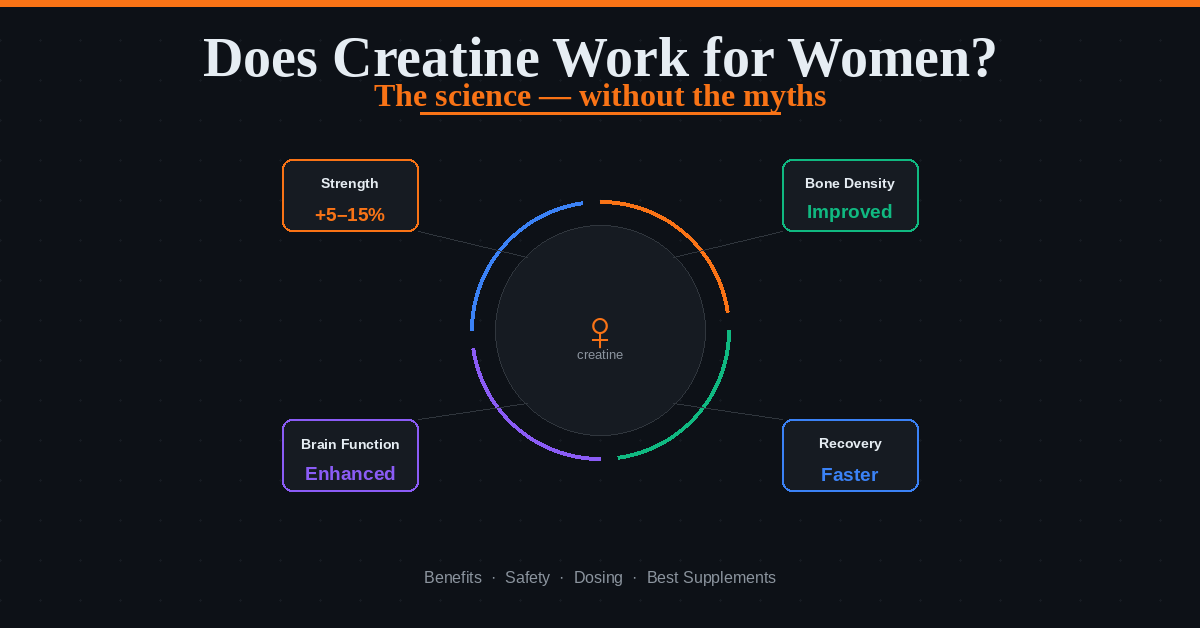
Strength and muscle tone Creatine increases the availability of phosphocreatine in muscle cells, which allows for faster ATP regeneration during high-intensity exercise. For women this translates to improved strength output, better performance in resistance training, and enhanced muscle tone – not increased muscle bulk. Research consistently shows strength gains of 5-15% with consistent creatine supplementation alongside resistance training. Women’s lower testosterone levels mean the muscle hypertrophy response is significantly smaller than in men – creatine improves performance and tone, not size.
Bone density This is one of the most underappreciated benefits of creatine for women specifically. Bone density loss accelerates significantly during perimenopause and menopause as estrogen declines. Research shows that creatine supplementation combined with resistance training produces measurable improvements in bone mineral density – particularly meaningful for women over 40 where osteoporosis risk begins to increase. For a supplement already being taken for performance benefits, the bone health upside is a significant additional value.
Cognitive function and brain health Your brain uses ATP constantly – and creatine supports ATP regeneration in neural tissue as well as muscle. A systematic review and meta-analysis published in Frontiers in Nutrition found creatine supplementation improved short-term memory and reasoning skills in healthy adults, with stronger effects in older participants and those with lower dietary creatine intake – both conditions common in women. Research also indicates creatine may reduce brain fog and mental fatigue particularly during sleep deprivation and high-stress periods – relevant for women balancing demanding schedules alongside training.
Creatine for perimenopause and menopause This is an emerging and particularly exciting area of research. A 2025 randomized controlled trial found that perimenopausal and menopausal women taking creatine daily for eight weeks showed measurable improvements in cognitive function and reduced brain fog. Combined with the bone density benefits discussed above, creatine makes a genuinely compelling case as a supplement for women over 40 regardless of training intensity. The hormonal changes of menopause reduce the body’s ability to synthesize creatine – supplementation directly addresses this deficit.
Recovery Creatine reduces muscle damage markers after intense training and speeds up the replenishment of phosphocreatine stores between sessions. For women following high-frequency training programs or combining strength and cardio work, faster recovery means more consistent training and better long-term results.
Does creatine make women bulky?
No – and this myth is important to address because it makes some women who may benefit from the use of creatine never try it.
Significant muscle hypertrophy – the kind that produces a visibly larger, bulkier physique – requires three things simultaneously: high testosterone levels, a significant calorie surplus, and years of progressive overload training specifically designed to maximize muscle growth. Women produce approximately 15-20 times less testosterone than men. Without sufficient testosterone the hormonal environment for dramatic muscle hypertrophy simply does not exist regardless of supplementation.
What creatine does produce in the first week is intramuscular water retention – water drawn into muscle cells alongside creatine. This causes a temporary weight increase of approximately 0.5-1kg and makes muscles appear slightly fuller. This is not fat gain and it is not subcutaneous bloating – it is water inside muscle cells which actually improves muscle definition and performance. For most women this effect is either unnoticeable or actively desirable. It resolves completely if you stop taking creatine.
The bottom line regarding creatine for women and potential bulking is clear – it improves how muscles perform and look without causing bulk.
Another common concern – hair loss – is equally unsupported by the evidence. See our article titled does creatine cause hair loss for the full breakdown.
Is creatine safe for women?
Yes – creatine is one of the most extensively studied supplements available and its safety profile for women is well established. A 2024 meta-analysis of 16 randomized controlled trials in over 615 women found no significant changes in kidney markers, liver enzymes, or hormones at doses up to 20g per day for 24 weeks. Kidney concerns that circulated in the early days of creatine research have been thoroughly debunked – confusion arose from the fact that creatine metabolism produces creatinine, a marker used to assess kidney function, leading to misinterpretation of test results. Studies confirm that creatine supplementation does not impair kidney function in healthy individuals at recommended doses.
Women with pre-existing kidney conditions should consult a healthcare provider before supplementing with creatine as with any supplement. For healthy women creatine is safe for long-term daily use.
Does creatine cause bloating in women?
Mild water retention in the first week is common and normal – it is the mechanism by which creatine works, drawing water into muscle cells as stores saturate. This is not the same as uncomfortable bloating. Systematic reviews show no meaningful difference in gastrointestinal complaints between creatine and placebo in women at recommended doses.
To minimize any initial discomfort: start with 3g daily rather than jumping straight to 5g, drink plenty of water – at least 2-2.5 litres daily – and take creatine with food rather than on an empty stomach. Skipping the loading phase entirely and simply taking 3-5g daily from the start is also a good option for women who are sensitive to digestive changes – full saturation takes 3-4 weeks instead of one but the end result is identical.
How much creatine should women take?
Most studies examining creatine for women use the same 3-5g daily dose. For a full breakdown of when to expect results see our how long does creatine take to work guide. Women do not need a different dose to men despite having lower body mass on average – research uses the same dosing protocol for both sexes and produces consistent results. Start with 3g daily for the first two weeks if you are sensitive to digestive changes, then increase to 5g. Take it consistently every day – including rest days – as muscle creatine stores need to remain elevated to maintain the benefits.
A loading phase – 20g per day split into four doses for 5-7 days – is optional. It saturates muscle stores in one week rather than three to four. Most women do better skipping the loading phase and building up gradually, particularly if digestive sensitivity is a concern. For a full breakdown of the loading phase approach see our creatine loading phase guide.
When should women take creatine?
Timing matters less than consistency. The most important thing is taking creatine every day. That said, research suggests taking creatine close to your workout – either immediately before or after training – produces slightly better results than taking it at unrelated times. Post-workout with a protein shake and carbohydrate source is a practical and effective approach for most women. On rest days take it with any meal at whatever time is most convenient. For more detail on timing see our when to take creatine guide.
Creatine for women over 40
Women over 40 have the most to gain from creatine supplementation and the least reason to be concerned about the bulking myth. At this life stage the priorities shift from performance-focused to health-focused – maintaining muscle mass, supporting bone density, preserving cognitive function, and managing energy levels through perimenopause. Creatine addresses all four directly.
Muscle mass naturally declines from the mid-30s onwards – a process called sarcopenia that accelerates after menopause. Creatine combined with resistance training is one of the most evidence-backed strategies for slowing this decline. Bone density loss accelerates after menopause – creatine and resistance training together produce measurable improvements. Cognitive changes during perimenopause – brain fog, memory issues, reduced mental clarity – are directly linked to changes in brain energy metabolism that creatine supports. Creatine for women over 40 is particularly well supported.
Best creatine supplements for women (2026)
There is no such thing as a gender-specific creatine formula – the active ingredient is creatine monohydrate and it works identically regardless of sex. What matters is quality, third-party testing, and purity. Here are our top picks:
ON Micronized Creatine – The best all-round choice for women starting creatine. Informed Sport certified, micronized for superior mixability, completely tasteless and easy to add to any drink or shake. Available in large sizes that keep the cost per serving very low for daily long-term use.

- Cotton
- Made in USA
- 5 grams pure creatine monohydrate per serving
Best for: Women new to creatine looking for a trusted, affordable, mixable option.
Thorne Creatine – The premium choice for women who want maximum quality assurance. NSF Certified for Sport – the most rigorous third-party certification available. Single ingredient, no additives, suitable for vegan and keto diets. Thorne is carried by professional sports organizations and medical clinics – the highest credibility option available.
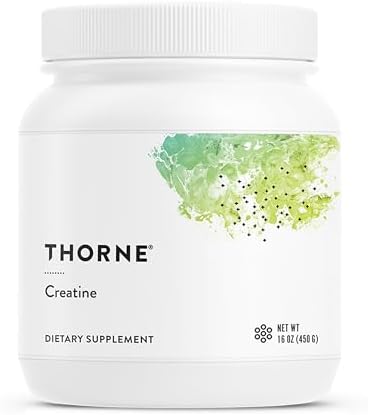
- Muscle Mass: Creatine is an amino acid that promotes lean body mass and supports increases in muscle endurance, muscle c…
- Cellular Energy Production: Creatine helps the cells of the body more efficiently create energy, thus benefiting exercis…
- Brain Function: Although creatine is known for its muscle-enhancing benefits, it has also been shown to support cognitiv…
Best for: Women over 40, competitive athletes, anyone who wants absolute certainty about product purity.
BulkSupplements Creatine – The best option for women who want pure creatine at the lowest possible cost per serving. Unflavored powder, no additives, third-party tested. Ideal for adding to smoothies, protein shakes, or coffee without affecting taste.

- Maximize your Potential: Enhance your active lifestyle with our Creatine Monohydrate powder, in Micronized Creatine powd…
- Versatility for all Lifestyles: Whether you’re an athlete, a sprinter, or someone simply looking to stay active, our Pur…
- Optimized in every Serving: Our Micronized Creatine Monohydrate powder, in Creatine 5000mg, is unflavored and free of un…
Best for: Budget-conscious women, daily long-term supplementation, adding to existing shakes.
Momentous Creatine – NSF Certified for Sport with a particularly clean, fine-milled powder that dissolves completely without any gritty texture. Momentous has built a strong reputation specifically in the women’s health and performance space. A solid premium option between BulkSupplements and Thorne on price.

- Build Lean Power: Help elevate your workout results with Momentous Creatine Powder for men & women. It helps enhance pos…
- Help Increase Energy: Boost your energy levels by incorporating our creatine monohydrate powder into your post-workout r…
- Boost Your Results: Our creatine powder isn’t just for muscle gains. Daily creatine supplementation supports neuroprotec…
Best for: Women who want a premium certified option with a reputation specifically in women’s performance.
Frequently asked questions
Does creatine affect women’s hormones?
No – research consistently shows creatine supplementation does not affect estrogen, progesterone, or testosterone levels in women. The 2024 meta-analysis of 615 women confirmed no hormonal changes at doses up to 20g daily for 24 weeks. Creatine is not a hormone and does not interact with the hormonal pathways that regulate the menstrual cycle.
Can women take creatine while on birth control?
Yes – there is no known interaction between creatine and hormonal contraceptives. Creatine is a naturally occurring amino acid derivative that your body already produces and obtains from food. It does not affect how hormonal contraceptives work.
Does creatine help with weight loss for women?
Creatine does not directly cause fat loss but it supports the conditions that make fat loss more effective. Better training performance means more calories burned during sessions. Preserved muscle mass during a calorie deficit keeps metabolic rate higher. The slight initial weight gain from water retention is not fat and does not reflect body composition changes. Women using creatine in a calorie deficit alongside resistance training typically see better body composition results than those training without it.
Can women take creatine every day?
Yes – daily supplementation is recommended and more effective than taking creatine only on training days. Muscle creatine stores need to remain consistently elevated to maintain benefits. Take 3-5g daily including rest days.
How long does creatine take to work for women?
With a loading phase full saturation occurs within 5-7 days. Without loading, consistent daily supplementation at 3-5g produces full saturation in 3-4 weeks. Most women notice improvements in training performance and recovery within 2-3 weeks of starting without loading. See our how long does creatine take to work guide for a full breakdown.
The bottom line
Creatine is one of the most well-researched, safe, and effective supplements available – and the evidence for women specifically is stronger than most people realize. Lower baseline stores mean more room to benefit. Unique advantages for bone density, cognitive function, and perimenopause health go well beyond what creatine offers men. The myths around bulking, hormonal disruption, and kidney damage are not supported by evidence.
Start with 3-5g of creatine monohydrate daily, skip the loading phase if you prefer a gradual approach, and take it consistently. Combined with your protein intake and a consistent training program it is one of the highest leverage supplements you can add to your stack. For a complete guide to creatine basics see our creatine monohydrate beginner’s guide.