Omega-3 for Muscle Recovery: What Fish Oil Can and Can’t Do (2026)
Fish oil is one of those supplements that almost everyone has heard of but very few people take correctly for training. Most gym-goers either ignore it entirely or grab the cheapest bottle at the pharmacy without knowing what dose they need or how long it takes to work. The result is that a genuinely useful supplement gets dismissed as overhyped because people aren’t using it in a way that produces results.
The science on omega-3 for muscle recovery is more solid than most people realize – and more nuanced than supplement companies want to admit. This guide covers what the research shows, what it doesn’t show, and exactly how to use fish oil if recovery is your goal.
Note: This post contains affiliate links. If you buy through our links we may earn a commission at no extra cost to you.
What are omega-3 fatty acids?
Omega-3 fatty acids are a family of polyunsaturated fats that your body cannot produce on its own. You have to get them from food or supplements. There are three main types – ALA, EPA, and DHA.
ALA is found in plant sources like flaxseed and walnuts. EPA and DHA are found in fatty fish like salmon, mackerel, and sardines. For recovery purposes EPA and DHA are the ones that matter. Your body can technically convert ALA into EPA and DHA but the conversion rate is extremely low – under 8% in most people – which is why eating oily fish or taking a fish oil supplement is significantly more effective than relying on plant-based omega-3 sources alone.
EPA – eicosapentaenoic acid – is the primary anti-inflammatory fatty acid. DHA – docosahexaenoic acid – supports cell membrane structure and neurological function. Both are incorporated into your muscle cell membranes when you supplement consistently which is what produces the recovery benefits over time.
How it works: omega-3 for muscle recovery
The mechanism is well understood. When you train hard – particularly eccentric movements like squats, deadlifts, and the lowering phase of any lift – you cause micro-damage to muscle fibers. Your body responds with an inflammatory cascade that is both necessary for adaptation and responsible for the soreness and strength loss you feel in the days after a hard session.
EPA and DHA work by modulating this inflammatory response. They compete with omega-6 fatty acids for the same enzymes – COX and LOX – that produce pro-inflammatory compounds. When your cell membranes are rich in EPA and DHA the inflammatory response to exercise is less aggressive. Muscle damage markers like creatine kinase come down faster. Soreness resolves more quickly. Strength returns sooner.
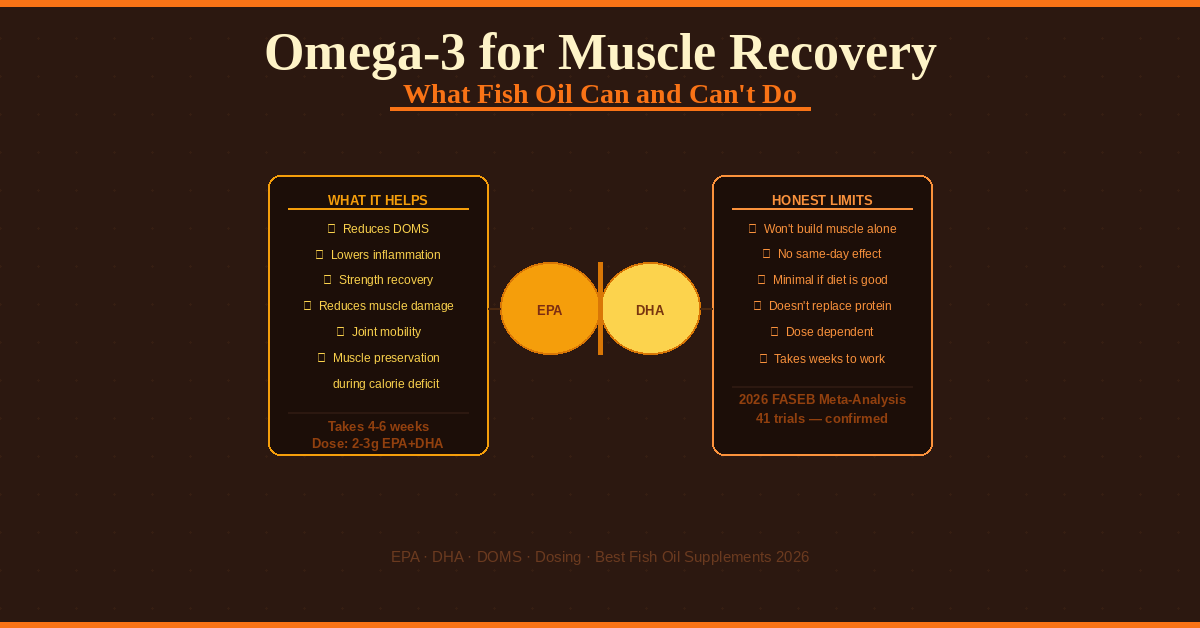
A 2026 meta-analysis published in the FASEB Journal analyzed 41 randomized controlled trials and confirmed that omega-3 supplementation produces moderate but significant reductions in DOMS, inflammation markers including IL-6 and TNF-α, and exercise-induced muscle damage. The key finding was that benefits were consistent across training populations at doses of approximately 2g of EPA and DHA combined per day for at least six weeks.
A 2026 study published in Scientific Reports found that eight weeks of omega-3 supplementation attenuated peak muscle strength loss after eccentric exercise compared to placebo – and identified increased oxylipin availability as a likely mechanism. This is brand new research that most supplement guides haven’t caught up with yet.
What omega-3 doesn’t do – the honest part
This is where a lot of fish oil marketing falls apart and it’s worth being direct.
Omega-3 doesn’t build muscle on its own. It’s not anabolic in the way protein and creatine are. The evidence for omega-3 directly increasing muscle protein synthesis is weak in young trained individuals – the more convincing data is in older adults where it helps counteract age-related muscle loss. If you’re under 40 and training regularly don’t expect fish oil to add mass.
It doesn’t work the same day. Unlike caffeine or creatine which have relatively fast onset, omega-3 works through gradual incorporation into your cell membranes. This takes four to six weeks of consistent supplementation before meaningful levels build up in muscle tissue. Taking a fish oil capsule the night before leg day does nothing.
It doesn’t replace protein. The recovery benefits of omega-3 are supplementary to adequate protein intake not a substitute for it. If you’re not hitting your protein targets consistently, fixing that will do more for recovery than any amount of fish oil.
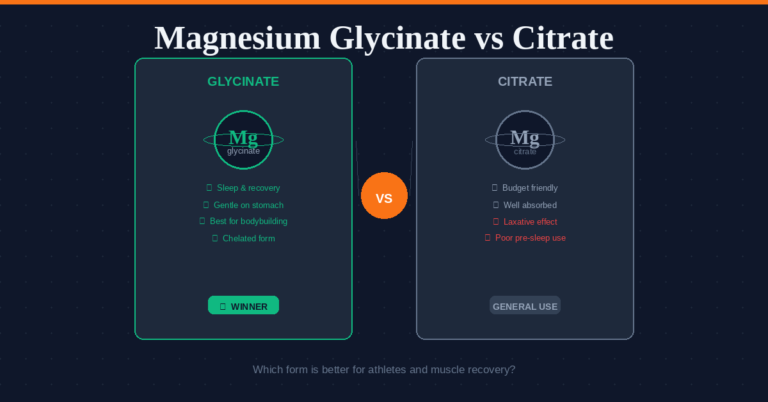
The benefits are also dose-dependent in a way that catches people off guard. A standard one-a-day pharmacy fish oil capsule typically contains 300mg of EPA and DHA combined. The research showing recovery benefits uses 2-3g of EPA and DHA per day. That’s six to ten standard capsules. Most people buying cheap fish oil at the grocery store are taking a fraction of the dose needed to see the results the studies demonstrate. For more on building a complete recovery supplement stack see our magnesium for muscle recovery guide – magnesium and omega-3 address different aspects of recovery and work well together.
How long does it take to work?
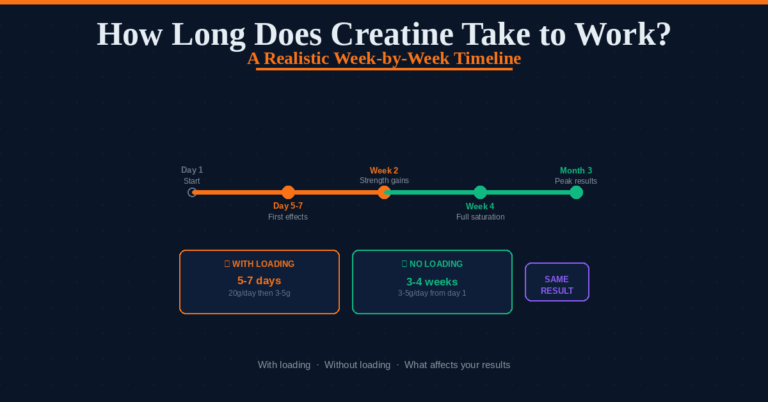
Four to six weeks minimum. This is non-negotiable and worth understanding.
Your cell membranes don’t change composition overnight. When you start supplementing with EPA and DHA they begin incorporating into phospholipid membranes throughout your body including your muscle cells. This process is gradual – research shows it takes approximately four weeks to see meaningful changes in membrane fatty acid composition and up to twelve weeks to reach a steady state plateau.
The practical implication is that the first month of supplementation is investment not immediate return. Stick with it consistently and the benefits compound. Most people who try fish oil for two weeks and notice nothing have simply not given it enough time.
If you’re serious about recovery as a long-term strategy omega-3 is worth pairing with vitamin D – another nutrient with significant recovery and anti-inflammatory evidence. See our vitamin D for athletes guide for a full breakdown.
The right dose for recovery
Based on the research the target is 2-3g of combined EPA and DHA per day — not total fish oil, but the active omega-3 content specifically.
This is an important distinction. A fish oil capsule might contain 1000mg of fish oil but only 300mg of EPA and DHA. To hit 2g of EPA and DHA from that product you’d need six to seven capsules per day. A higher concentration product – 600-800mg of EPA and DHA per capsule – gets you to the target dose in three capsules which is much more practical.
When reading a fish oil label look specifically at the EPA and DHA amounts per serving not the total fish oil or omega-3 content. That’s the number that matters for recovery.
Timing is flexible – with meals is best since omega-3 is a fat-soluble compound and absorption improves alongside dietary fat. Splitting across two meals reduces any fishy aftertaste some people experience.
Best fish oil supplements for muscle recovery (2026)
The two factors that matter most when choosing a fish oil supplement is making sure it contains the right amount of omega-3 for muscle recovery – specifically EPA and DHA concentration per serving and third-party testing for purity. Fish oil can contain contaminants including heavy metals and PCBs – a quality supplement will have been tested and certified clean.
Best overall – Nordic Naturals Ultimate Omega – The gold standard in fish oil supplementation. Nordic Naturals Ultimate Omega delivers 1,280mg of combined EPA and DHA per two-capsule serving – one of the highest concentrations available. Friend of the Sea certified sustainable sourcing, third-party tested for purity, and exceptionally clean with no fishy aftertaste. Two servings per day gets you to the recovery-relevant 2.5g EPA and DHA range cleanly.

- WHY OMEGA-3s – Research shows that the essential fatty acids EPA & DHA in fish oil support heart, brain, eye function.*
- #1 SELLING OMEGA-3 BRAND IN THE U.S* – Nordic Naturals Ultimate Omega features high concentration omega-3 fish oil in so…
- BETTER ABSORPTION, BETTER TASTE, NO FISHY BURPS – All of our omega-3 fish oil concentrates are in the triglyceride molec…
Best for: Anyone who wants the most trusted name in fish oil with high EPA and DHA concentration and verified purity.
Best value – Sports Research Triple Strength Omega-3 – The most cost-effective way to hit therapeutic doses. Sports Research Triple Strength delivers 1,250mg of EPA and DHA per softgel – comparable to Nordic Naturals at a significantly lower price per serving. IFOS five-star certified for purity, burpless formula, and sustainably sourced. Two softgels per day covers the recovery dose without breaking the budget.
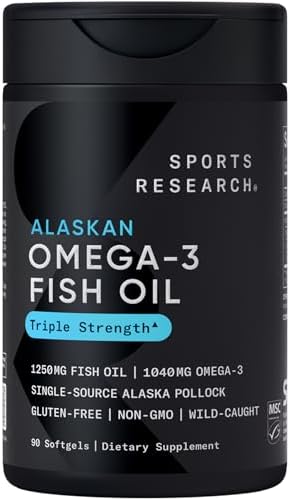
- ALWAYS FRESH, NEVER FISHY: Say goodbye to fishy aftertaste, burps, and lingering odor. Our Triple Strength Omega-3 Fish …
- WHAT’S INSIDE – JUST ONE A DAY: Each pescatarian-friendly softgel delivers 1250mg of fish oil, providing a minimum of 10…
- SUSTAINABLY SOURCED FROM ALASKA POLLOCK: We source exclusively from wild-caught Alaska Pollock harvested in the cold, pr…
Best for: Anyone who wants clinical-level dosing at an accessible price without compromising on quality or purity.
Budget pick – NOW Foods Super Omega-3 – Solid clinical dosing at an accessible price. NOW Foods Super Omega-3 delivers 360mg EPA and 240mg DHA per softgel – 600mg of combined EPA and DHA per capsule. Four capsules per day gets you cleanly into the 2.4g EPA and DHA recovery range without needing to take a handful of underdosed capsules. NOW Foods has a long track record of quality manufacturing and this is one of the best value-per-gram options available.
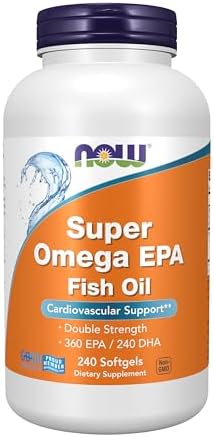
- CARDIOVASCULAR SUPPORT*: NOW Super Omega EPA has twice the EPA (360 mg per softgel) as in our regular strength product (…
- STRICT QUALITY CONTROL: This fish oil concentrate is manufactured under strict quality control standards
- CERTIFICATIONS/CLASSIFICATIONS: Non-GMO, Kosher (contains gelatin), GMP Quality Assured
Best for: Anyone who wants a reliable mid-concentration fish oil at a budget-friendly price without compromising on EPA and DHA dosing.
Fish oil vs algae oil – what about vegans?
EPA and DHA in fish oil originally come from algae – fish accumulate them by eating algae in the food chain. Algae-based omega-3 supplements cut out the middleman and deliver EPA and DHA directly from the original source. They’re vegan, sustainable, and carry no risk of fishy aftertaste or contamination concerns.
The research on algae-based EPA and DHA shows equivalent bioavailability to fish oil. If you’re vegan, vegetarian, or simply prefer a plant-based option algae oil is a genuine alternative that delivers the same recovery benefits at the right dose. It’s typically more expensive per gram of EPA and DHA but the quality is comparable.
Frequently asked questions
How much omega-3 should I take for muscle recovery?
The research-backed dose for recovery benefits is 2-3g of combined EPA and DHA per day – not total fish oil but specifically the EPA and DHA content listed on the label. Most standard fish oil capsules contain 300-360mg of EPA and DHA per capsule meaning you need multiple capsules to reach an effective dose. A high-concentration product delivering 600-1,000mg of EPA and DHA per capsule is significantly more practical.
How long before omega-3 helps with soreness?
Expect four to six weeks of consistent daily supplementation before you notice meaningful recovery benefits. Omega-3 works through gradual incorporation into muscle cell membranes – this is a slow process that can’t be rushed. The first month is building a foundation. Most people who give up after two weeks haven’t given it sufficient time to work.
Can I get enough omega-3 from food?
If you eat fatty fish – salmon, mackerel, sardines, herring – two to three times per week you’re getting meaningful EPA and DHA from your diet. However reaching the 2-3g per day dose relevant for recovery from food alone would require eating oily fish daily which most people don’t do consistently. Supplementation is the practical way to ensure consistent daily intake at the right dose.
Does omega-3 help with DOMS?
Yes – the evidence is reasonably consistent. Multiple studies show that omega-3 supplementation reduces delayed onset muscle soreness following eccentric exercise, particularly in people with a low baseline omega-3 index. The 2026 FASEB meta-analysis of 41 trials confirmed moderate but significant reductions in DOMS markers at 2g+ EPA and DHA daily. The effect is not dramatic – it won’t eliminate soreness – but meaningful reductions in soreness and faster strength recovery are well supported.
Should I take omega-3 with creatine?
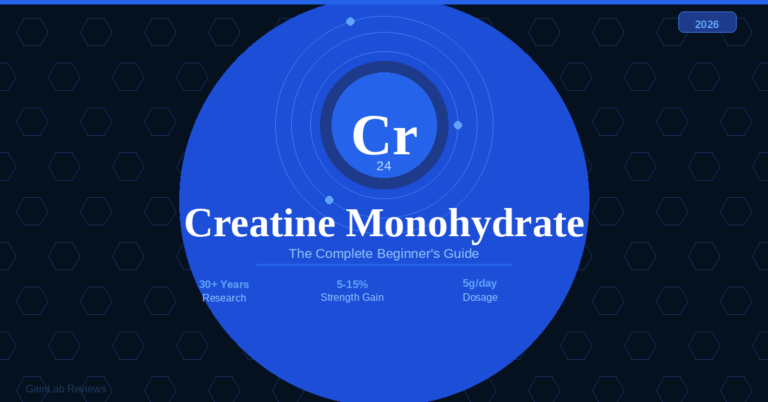
Yes – they work through completely different mechanisms and complement each other well. Creatine improves strength, power, and training performance by increasing phosphocreatine availability. Omega-3 supports recovery by moderating inflammation and muscle damage. Taking both covers two different aspects of training support. See our creatine monohydrate beginners guide for a full breakdown of creatine dosing and timing.
Is fish oil safe to take daily?
Yes – fish oil has an excellent long-term safety profile in healthy individuals at recommended doses. The main considerations are choosing a third-party tested product to avoid contamination, taking it with food to reduce any digestive discomfort, and being aware that very high doses above 3g per day may affect blood clotting – relevant if you’re on blood-thinning medication. For most healthy people training regularly daily fish oil at 2-3g EPA and DHA is safe and well tolerated.
The bottom line
Omega-3 is one of the more underrated supplements in a training stack – not because it’s miraculous but because the benefits are real, consistent, and backed by strong research including a 2026 meta-analysis of 41 trials. Reduced DOMS, faster strength recovery, and lower inflammation markers are all documented at 2-3g of EPA and DHA per day after four to six weeks of consistent use.
When taking omega-3 for muscle recovery the key is dose and patience. Most people either take too little or give up too soon. Get a high-concentration product, hit the 2-3g EPA and DHA target daily, and give it six weeks before judging the results. For anyone training regularly who wants to recover faster between sessions this is a supplement worth adding to a stack that already includes adequate protein, magnesium, and vitamin D.