Creatine HCL vs Monohydrate: Which Should You Buy? (2026)
Creatine HCL vs monohydrate is one of the most debated questions in sports nutrition. Walk into any supplement store and you’ll find both on the shelf – monohydrate at half the price, HCL marketed as the superior evolved version. The truth is more nuanced than either side admits. This guide breaks down the science honestly so you can make the right choice for your goals and budget.
Note: This post contains affiliate links. If you buy through our links we may earn a commission at no extra cost to you.
What is creatine monohydrate?
Creatine monohydrate is creatine bonded to a single water molecule. It is the most researched form of creatine in existence – over 500 peer-reviewed studies have examined its safety and effectiveness across populations ranging from elite athletes to elderly adults. Every major finding about creatine’s benefits – increased strength, improved power output, enhanced muscle growth, faster recovery – comes from research conducted using creatine monohydrate. It is the gold standard against which every other form is measured.
What is creatine HCL?
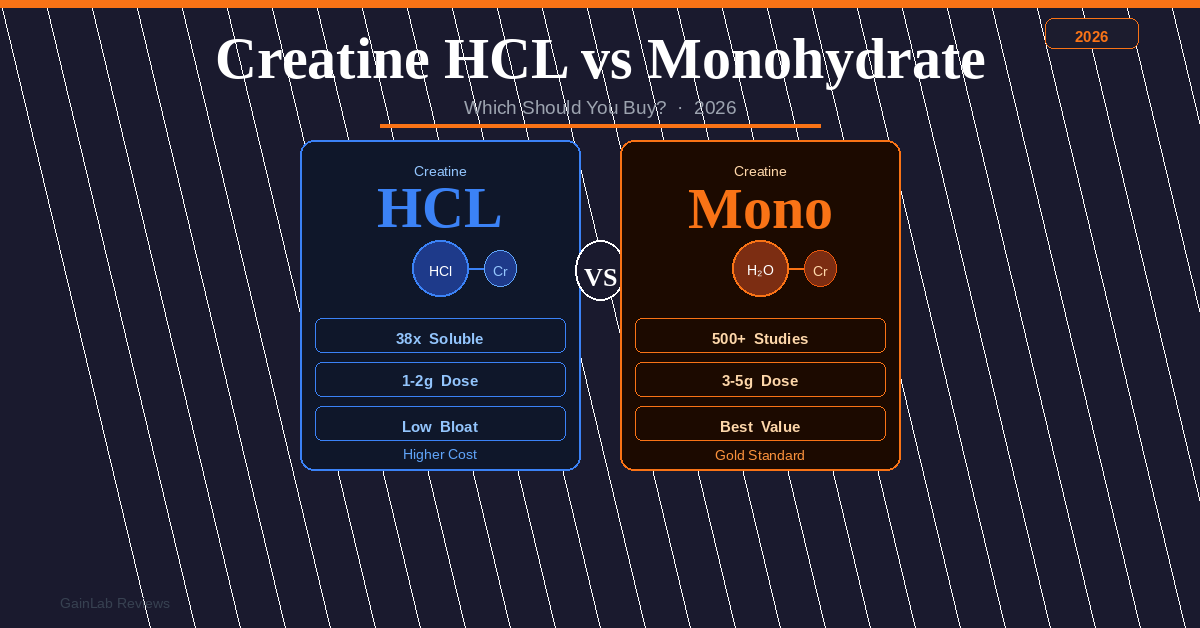
Creatine HCL – or creatine hydrochloride – is creatine bonded to hydrochloric acid instead of water. This changes its chemical properties significantly. Creatine HCL is approximately 40 times more soluble in water than creatine monohydrate, dissolves completely without gritty texture, and requires a much smaller dose – typically 1-2g per day compared to 3-5g for monohydrate. It was developed to address the two main complaints about monohydrate – digestive discomfort and bloating during the loading phase.
Creatine HCL vs monohydrate – the key differences
These are the five main areas where the two forms actually differ in practice:
Solubility – HCL wins clearly. It dissolves completely in a small amount of water with no gritty residue. Monohydrate, particularly unmicronized versions, can leave a grainy texture.
Dosage – HCL wins. A typical effective dose is 1-2g of HCL vs 3-5g of monohydrate daily. However this is partly because HCL contains less creatine by mass – around 78% creatine vs 90% for monohydrate – so the gap is smaller than it appears.
Digestive tolerance – HCL wins for sensitive stomachs. Its higher solubility means less undissolved powder irritating the gut. Monohydrate bloating is most common during loading phases at 20g per day – at a standard 5g maintenance dose most people have no issues.
Research backing – Monohydrate wins by a wide margin. HCL has a handful of studies. Monohydrate has over 500. When researchers need a baseline for creatine research they use monohydrate – that tells you everything.
Cost – Monohydrate wins significantly. HCL typically costs 2-3x more per effective dose than monohydrate. The smaller serving size of HCL narrows the gap slightly but monohydrate remains the far more economical choice.
Do they produce the same results?
The available evidence suggests yes – when doses are matched for actual creatine content, both forms produce similar increases in muscle creatine stores, strength, and performance. A study comparing matched doses found lean body mass gains of 2.1kg for HCL and 2.3kg for monohydrate over 8 weeks – essentially identical. Muscle hypertrophy results were similarly comparable. The theoretical advantage of HCL’s superior absorption has not translated into meaningfully superior results in the research that exists. This is the most important finding in the creatine HCL vs monohydrate debate.
Who should choose monohydrate?
Monohydrate is the right choice for most people. Choose monohydrate if you have a normal digestive system with no issues taking supplements, you want the most researched and proven form available, budget matters to you – monohydrate costs significantly less per gram, or you want flexibility on loading vs non-loading protocols. Our recommended monohydrate products are the same ones we cover in our full creatine guide.
Who should choose creatine HCL?
HCL makes sense for a specific group of people. Choose HCL if you consistently experience bloating or digestive discomfort with monohydrate even at low doses, you dislike the texture of monohydrate powder and HCL’s complete dissolution is important to you, you want to avoid any loading phase entirely, or budget is less of a concern and you prefer a smaller daily dose for convenience.
Best creatine HCL products (2026)
If you’ve decided HCL is right for you here are the best options available. Look for products with transparent labeling showing exact creatine content per serving – some HCL products are significantly overpriced for what you get:
Con-Cret Creatine HCL The original and most established creatine HCL product on the market. Con-Cret pioneered the micro-dosing approach to creatine supplementation and holds multiple patents on creatine HCL formulation. Each serving delivers a concentrated dose that dissolves completely in a small amount of liquid with zero gritty texture. Available in both powder and capsule form making it the most versatile HCL option available. More expensive than monohydrate but the go-to choice for anyone committed to the HCL form.

- CON-CRĒT Creatine HCl (Creatine Hydrochloride) is 7X Concentrated vs Creatine Monohydrate. Provide cellular energy to al…
- Creatine HCl with its superior solubility and absorption allows smaller doses while maintaining effectiveness and provid…
- Creatine helps your cells function optimally with more energy. Think of creatine as a turbocharger for your cells, givin…
Kaged Creatine HCL A premium creatine HCL from one of the most transparent supplement brands in the industry. Kaged uses patented Creatine HCl that is Informed Sport certified – independently tested for banned substances making it suitable for competitive athletes subject to drug testing. Fully disclosed label with exact creatine content per serving. Mixes instantly in water with no residue. Kaged’s commitment to label accuracy and third party testing makes this the most trustworthy HCL option for serious athletes.

- SUPERIOR BIOAVAILABILITY: With superior solubility and unmatched bioavailability, Kaged Patented Creatine HCl gets to wo…
- ENHANCED SOLUBILITY YOU CAN SEE: Thanks to its superior quality and solubility, our patented Creatine HCl completely dis…
- HIGHLY-ABSORBABLE & ULTRA PURE CREATINE HYDROCHLORIDE 750mg: If you’ve experienced GI discomfort, or your gut and stomac…
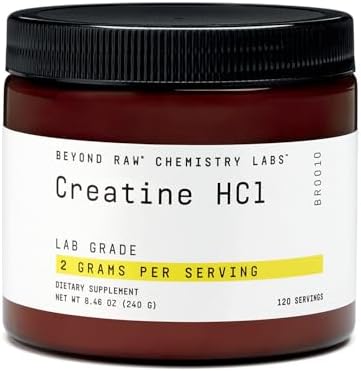
Beyond Raw Creatine HCL One of the most widely available creatine HCL supplements on the market. Beyond Raw Chemistry Labs Creatine HCL delivers 2g of lab-grade micronized creatine HCL per serving with zero additives – just pure creatine hydrochloride and nothing else. Available at Amazon, GNC, Walmart, and iHerb making it the most accessible HCL option if you want to pick it up locally rather than ordering online. Highly rated with over 3,000 Amazon reviews. Best taken mixed with juice or a protein shake as the unflavored version has a strong taste in plain water.
- ULTRA CONCENTRATED CREATINE: Low dose and ultra-concentrated, BEYOND RAW Chemistry Labs Creatine HCl provides 26 times m…
- REACH PEAK PERFORMANCE: Chemistry Labs Creatine HCL powder is the ideal supplement for building muscle, supporting energ…
- GET PRIMED FOR BIGGER GAINS: Creatine plays an important role in muscle protein synthesis and may increase the amount of…
Best creatine monohydrate products (2026)
For most people monohydrate remains the best choice. These are the same products we recommend in our full creatine guide – proven, affordable, and backed by decades of research:
Optimum Nutrition Creatine Monohydrate The world’s best selling creatine for good reason. ON Micronized Creatine is Informed Sport certified, micronized for superior mixability, and available in bulk sizes that bring the cost per serving down to among the lowest available. Completely tasteless and dissolves easily in water, juice, or your protein shake. Backed by decades of consumer trust and ON’s rigorous quality standards. Our top pick for most beginners starting creatine for the first time.

- 5 grams pure creatine monohydrate per serving
- Supports increases in energy, endurance and recovery
- Maximum potency supports muscle size, strength, and power
Thorne Creatine Monohydrate The premium monohydrate choice for athletes who need absolute certainty about what they’re consuming. Thorne Creatine is NSF Certified for Sport – the most rigorous third party certification available and required by many professional sports organizations. Uses a clean micronized formula with no unnecessary additives. Higher price point than budget options but the NSF certification provides a level of quality assurance that no other certification matches.
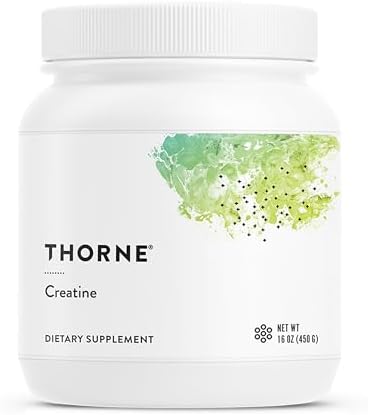
- Muscle Mass: Creatine is an amino acid that promotes lean body mass and supports increases in muscle endurance, muscle c…
- Cellular Energy Production: Creatine helps the cells of the body more efficiently create energy, thus benefiting exercis…
- Brain Function: Although creatine is known for its muscle-enhancing benefits, it has also been shown to support cognitiv…
BulkSupplements Creatine Monohydrate The best value creatine monohydrate available anywhere. Pure micronized creatine monohydrate with zero additives, sold in quantities from 100g to 5kg at the lowest cost per gram on the market. Third party tested for purity. Unflavored and mixes easily into any liquid. No branding, no marketing spend, just pure creatine at an unbeatable price. Ideal for anyone who wants maximum quality at minimum cost – which for creatine monohydrate is genuinely the smartest approach.

- Maximize your Potential: Enhance your active lifestyle with our Creatine Monohydrate powder, in Micronized Creatine powd…
- Versatility for all Lifestyles: Whether you’re an athlete, a sprinter, or someone simply looking to stay active, our Pur…
- Optimized in every Serving: Our Micronized Creatine Monohydrate powder, in Creatine 5000mg, is unflavored and free of un…
Frequently asked questions
Is creatine HCL better than monohydrate?
Not based on current evidence. HCL offers advantages in solubility and digestive tolerance but produces similar muscle and performance results to monohydrate at equivalent doses. Monohydrate has vastly more research behind it and costs significantly less. For most people monohydrate is the better overall choice.
Can I switch from monohydrate to HCL?
Yes – you can switch at any time. If switching from monohydrate to HCL reduce your dose from 5g to 1-2g since HCL requires a smaller serving. Your existing creatine stores will remain elevated during the transition so you won’t lose progress.
Does creatine HCL require a loading phase?
No – because of its superior absorption HCL reaches effective muscle saturation without a loading phase. Take 1-2g daily consistently and you’ll reach full saturation within 3-4 weeks. This is one of HCL’s genuine practical advantages over monohydrate.
Is creatine HCL safe?
Yes – creatine HCL has a strong safety profile with no significant adverse effects reported in studies. As a form of creatine the fundamental safety considerations are the same as monohydrate – safe for healthy individuals, consult a doctor if you have kidney conditions, and stay well hydrated.
Creatine HCL vs monohydrate – our verdict
The creatine HCL vs monohydrate debate has a clear practical answer for most people – buy monohydrate. It has 30 years of research behind it, costs significantly less, and produces results identical to HCL in every head-to-head study conducted so far. The marketing around HCL is impressive but the evidence simply doesn’t justify the premium price for most users. The exception is people who genuinely struggle with digestive issues on monohydrate – for that specific group HCL’s superior solubility is a real practical advantage worth paying for. Start with monohydrate, and only consider switching to HCL if you experience consistent digestive discomfort that doesn’t resolve at lower doses.
Whichever form you choose, see our article titled how long does creatine take to work to set realistic expectations for your timeline.