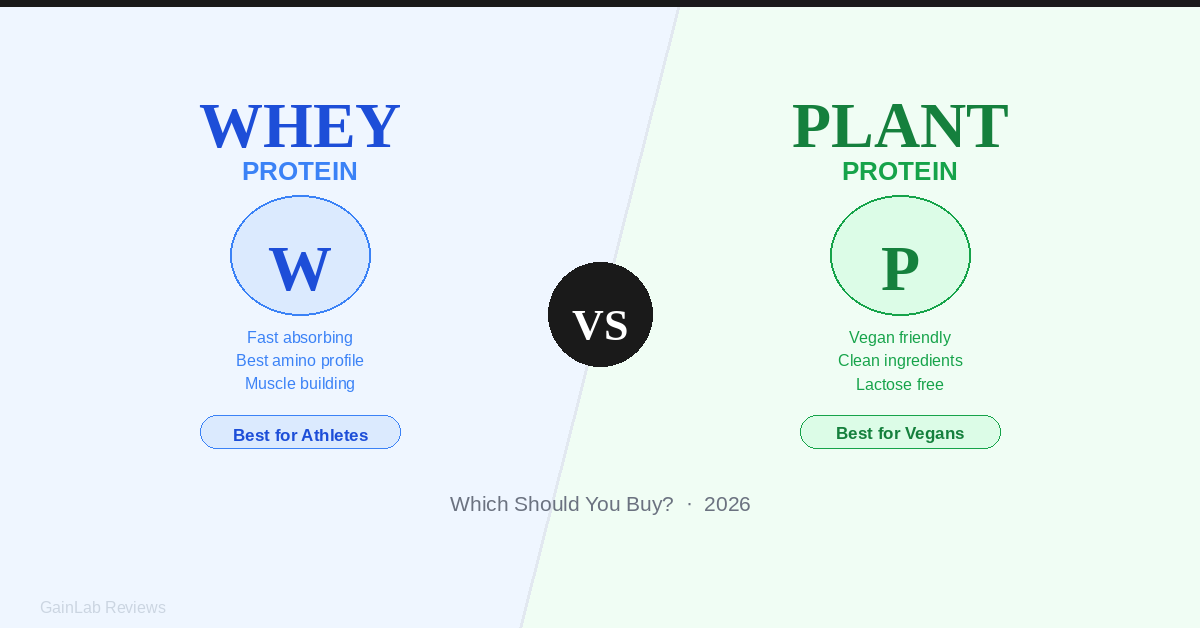
Whey vs Plant Protein: Which Should You Buy? (2026)
Whey vs plant protein – choosing between the two is one of the most common questions beginners ask. Both work – but they work differently and suit different people. This guide breaks down the key differences so you can make the right choice for your goals, diet, and budget.
Note: This post contains affiliate links. If you buy through our links we may earn a commission at no extra cost to you.
What is whey protein?
Whey protein comes from milk – it’s the liquid byproduct separated during cheese production. Once separated it is filtered, processed, and dried into powder. It is a complete protein containing all nine essential amino acids in proportions that closely match what your muscles need for repair and growth. Whey is particularly high in leucine – the amino acid most directly responsible for triggering muscle protein synthesis – with approximately 10-11g of leucine per 100g of protein. It digests and absorbs rapidly, typically reaching peak blood amino acid levels within 60-90 minutes of consumption.
Research published in the American Journal of Clinical Nutrition consistently confirms whey as one of the most effective protein sources available for stimulating muscle protein synthesis. Three main forms exist – concentrate (80% protein, some fat and lactose), isolate (90%+ protein, minimal fat and lactose, better for lactose sensitive individuals), and hydrolysate (pre-digested for fastest absorption, most expensive). For most beginners whey concentrate or isolate is the right choice.
What is plant protein?
Plant protein is derived from sources including peas, brown rice, hemp, soy, pumpkin seed, and sunflower seed. The key challenge with plant proteins is amino acid completeness – most individual plant sources are low in one or more essential amino acids. Pea protein is low in methionine. Brown rice protein is low in lysine. This is why quality plant protein supplements blend multiple sources – typically pea and brown rice combined – to create a complete amino acid profile that covers all nine essential amino acids. Soy protein is the exception – it is a complete protein on its own and has the strongest research support of any plant protein source. Modern blended plant proteins have improved dramatically in recent years.
Research published in Sports Medicine found that high quality plant protein can produce similar muscle protein synthesis responses to whey when leucine content is matched and total daily protein intake is adequate. The practical implication is that plant protein works effectively for muscle building – it just requires slightly more attention to total daily protein intake and amino acid completeness.
Whey vs plant protein – key differences
Here’s how they compare across the factors that matter most to beginners:
| Factor | Whey | Plant |
|---|---|---|
| Protein per serving | 24-27g | 20-25g |
| Complete amino acids | Yes | Depends on blend |
| Digestion speed | Fast | Moderate |
| Best for | Muscle building | Vegan/lactose free |
| Price | $ - $$ | $$ - $$$ |
Protein quality – DIAAS scores explained
Not all protein is created equal and the most accurate way to measure protein quality is the DIAAS score – Digestible Indispensable Amino Acid Score. This is the current gold standard for protein quality assessment used by the WHO and FAO.
Whey protein isolate has a DIAAS score of approximately 1.09 – above 1.0 which indicates an excellent protein source that exceeds requirements for all essential amino acids. Pea protein has a DIAAS of approximately 0.82 – good but below the threshold, reflecting its lower methionine content. A well-formulated pea and brown rice blend achieves a DIAAS closer to 1.0, making it nutritionally comparable to whey for most practical purposes.
For beginners the practical takeaway is that whey protein has a slight nutritional edge in raw protein quality. However this difference is largely negated by consuming slightly more total protein – if you hit your daily protein target consistently the source matters far less than the habit.
Which is better for muscle building?
Whey has a meaningful edge for pure muscle building efficiency. Its higher leucine content – approximately 10-11g per 100g compared to 7-8g for pea protein – produces a stronger acute muscle protein synthesis response per gram consumed. Whey also digests faster making it the superior post-workout option when rapid amino acid delivery is the goal.
However the practical difference is smaller than most people realize. A meta-analysis published in the Journal of the International Society of Sports Nutrition found that plant protein can produce equivalent muscle gains to whey when total daily protein intake is adequate – typically 1.6-2.2g per kilogram of bodyweight per day. The key for plant protein users is ensuring total daily intake is sufficient to compensate for the slightly lower per-gram efficiency. If you are hitting your protein targets consistently the source makes less difference to your results than training quality and progressive overload. For a complete guide to protein powder specifically for muscle building see our best protein powder for beginners guide.
Which is better for weight loss?
Both work equally well for weight loss – protein keeps you full regardless of source. Plant protein has a slight edge here because it’s often higher in fiber which increases satiety further. Choose whichever you prefer and will take consistently.
Digestibility and stomach tolerance
This is where individual variation matters most. Whey concentrate contains lactose – the milk sugar that causes digestive issues in lactose intolerant individuals. Estimates suggest 65% of the global population has some degree of lactose intolerance though severity varies significantly. If you experience bloating, gas, or digestive discomfort from whey concentrate switching to whey isolate – which removes most of the lactose – resolves the issue for most people.
Plant proteins are generally very well tolerated. Pea protein in particular has an excellent digestibility profile and is suitable for people with dairy, gluten, and soy allergies. The exception is soy protein which is a common allergen and not appropriate for people with soy sensitivity.
If you have no digestive issues with dairy whey is the more practical and affordable option. If you experience discomfort from whey concentrate, whey isolate or plant protein are both sensible alternatives.
Who should choose whey?
Choose whey if you eat dairy, want maximum muscle building results, prefer lower cost per serving, and want the widest range of flavors and brands to choose from.
Who should choose plant protein?
Choose plant protein if you’re vegan or vegetarian, are lactose intolerant or sensitive to dairy, prefer cleaner ingredient labels, or simply feel better digestively on plant-based foods.
Our top picks for each
Best whey protein – Optimum Nutrition Gold Standard Whey: The most trusted whey protein available. Gold Standard delivers 24g of protein per serving from a blend of whey isolate and concentrate, mixes easily, and comes in a wide range of flavors. Decades of consistent positive reviews and the most widely tested whey protein on the market.
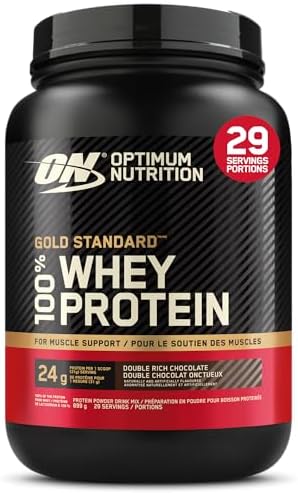
- 24 g High-Quality Whey Protein per Scoop – 100% of the protein from whey for a fast-absorbing, complete protein source t…
- 5.5 g Naturally-Occurring BCAAs + 11g of naturally occurring EAAs – Delivers essential amino acids including leucine, is…
- Low Sugar, Low Carb, Low Fat — Ideal for Lean Muscle or Cutting Phases – With just ~1 g sugar, ~3 g carbs per serving, a…
Best for: Beginners who want a proven, affordable, widely available whey protein.
Best plant protein – Orgain Organic Plant Protein: The best tasting plant protein at an accessible price point. Orgain uses a pea, brown rice, and chia seed blend for a complete amino acid profile. USDA organic certified, no artificial sweeteners, and genuinely good flavour compared to most plant proteins. 21g of protein per serving.

- CLEANER INGREDIENTS: 21g of Organic plant based protein and 1g sugar. Our protein blend contains Organic peas, brown ric…
- HIGHER STANDARDS: This product is vegan, contains no erythritol, gluten-free, kosher, made without soy ingredients & Non…
- USDA ORGANIC & CERTIFIED PLANT-BASED: To ensure we are delivering on high-quality products, we use third parties to veri…
Best for: Vegans, vegetarians, anyone who is lactose intolerant, and anyone who prefers cleaner ingredient labels.
Frequently asked questions
Can I mix whey and plant protein?
Yes – some people use whey post-workout for fast absorption and plant protein at other times. There’s no harm in using both.
Is plant protein harder to digest?
Some people find plant protein easier to digest than whey, especially those with lactose sensitivity. Pea protein in particular is very well tolerated.
Which tastes better?
Whey generally tastes better and has more flavor options. Plant protein has improved significantly but whey still wins on taste for most people.
How much protein do I need per day?
The research-backed recommendation for people who train regularly is 1.6-2.2g of protein per kilogram of bodyweight per day. For a 75kg person that is approximately 120-165g of protein daily. Most people struggle to hit this through whole foods alone which is where a protein supplement – whether whey or plant – fills the gap efficiently. See our protein powder for weight loss guide for more information on how protein intake affects body composition.
Is whey protein safe long term?
Yes – whey protein is one of the most extensively studied food supplements available and has an excellent long-term safety profile in healthy individuals. Research confirms no adverse effects on kidney or liver function at recommended intakes in people without pre-existing conditions. The concern about protein damaging kidneys applies only to individuals with pre-existing kidney disease – for healthy adults high protein intake is safe.
Can plant protein build as much muscle as whey?
Yes – provided total daily protein intake is adequate. The slight per-gram efficiency advantage of whey can be offset by consuming marginally more plant protein overall. Studies comparing matched-protein diets show no significant difference in lean mass gains between whey and plant protein groups when total intake is equalized. The consistency of your protein intake over weeks and months matters far more than whether it comes from whey or plants.
The bottom line
Whey protein is the best choice for most beginners – it’s more affordable, better researched, and delivers slightly better muscle building results. But if you’re vegan, lactose intolerant, or simply prefer plant-based products, modern plant proteins are genuinely effective and worth choosing. Either way, the most important thing is hitting your daily protein target consistently – the source matters far less than the habit.